Who we are

Blue Ridge Biomedical is a medical device company dedicated to improving outcomes in critical and postoperative care through clinically integrated diagnostics. We address gaps in current monitoring—where detection is delayed, intermittent, or burdensome—by designing technologies that provide earlier, actionable insights without disrupting clinical workflows. Founded by a multidisciplinary team of engineers and clinicians, we translate emerging biomarker research into practical point-of-care systems that support timely intervention, reduce complications, and improve patient care when it matters most.

Our patent-pending product, NephroGuard, has received great recognition in several design and pitch competitions:

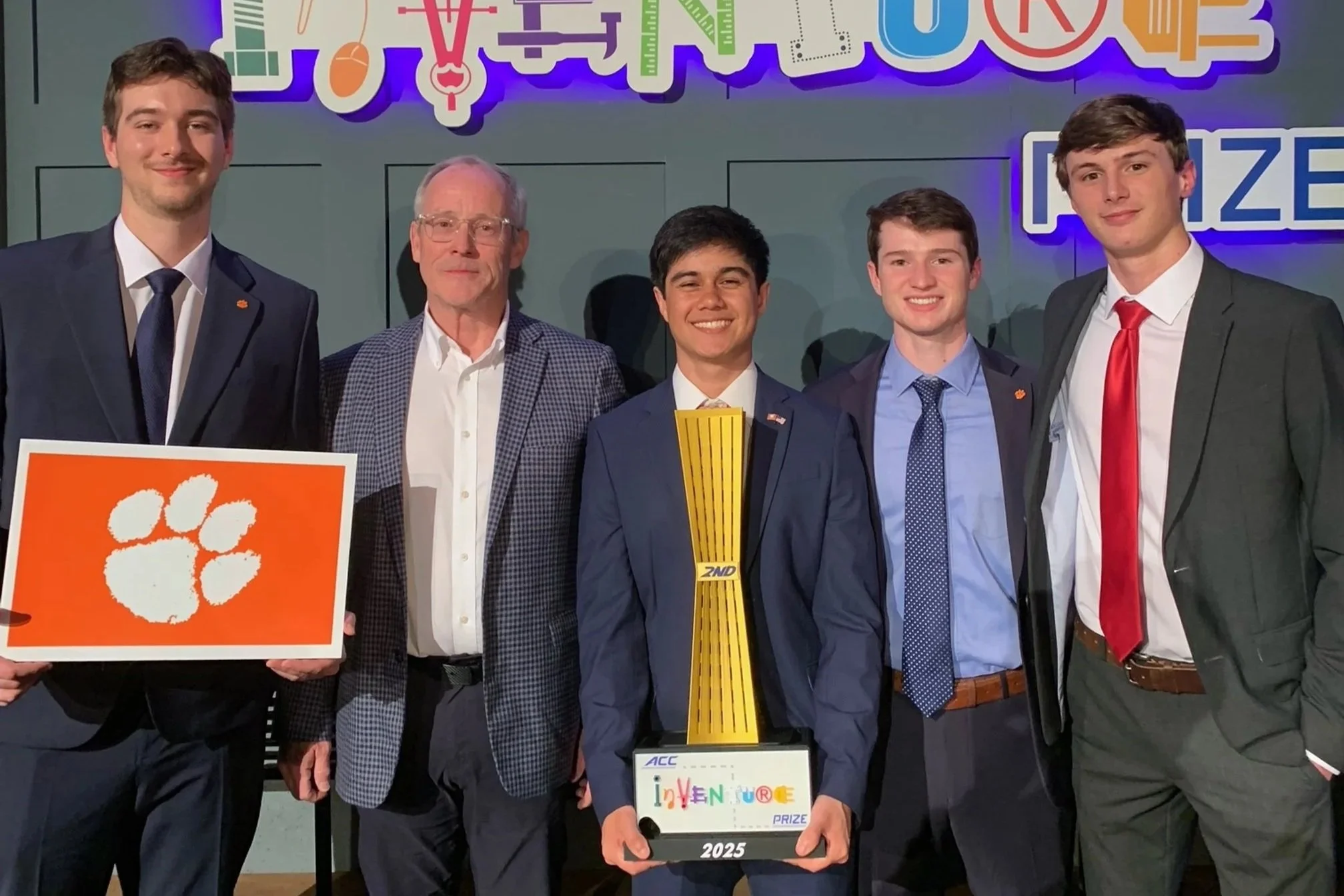
  • Atlantic Coast Conference InVenture 2025 — 2nd Place

  • NIH-DEBUT 2024 — NIDDK Kidney Technology Development Prize

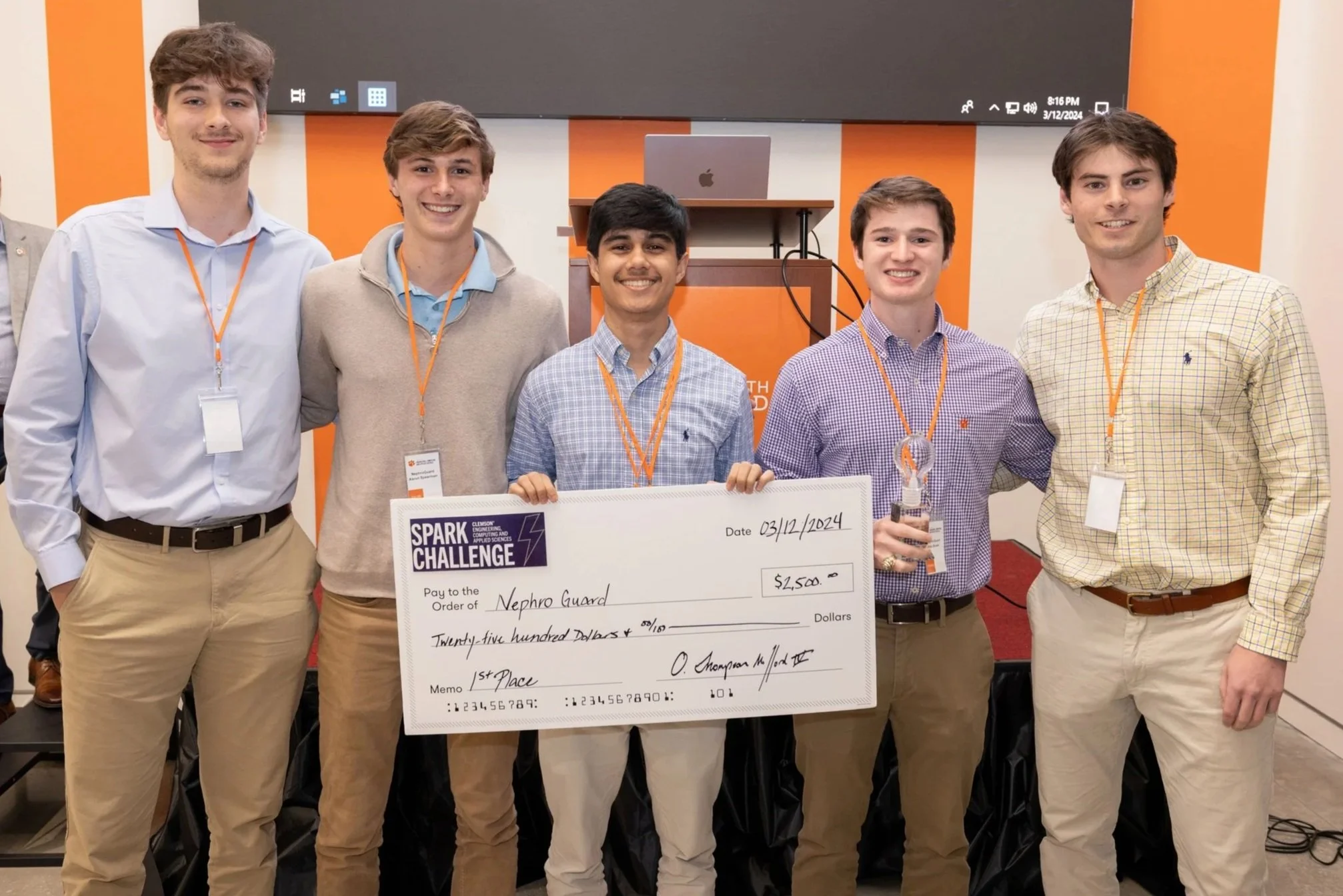
  • Clemson SPARK Challenge 2024 — 1st Place

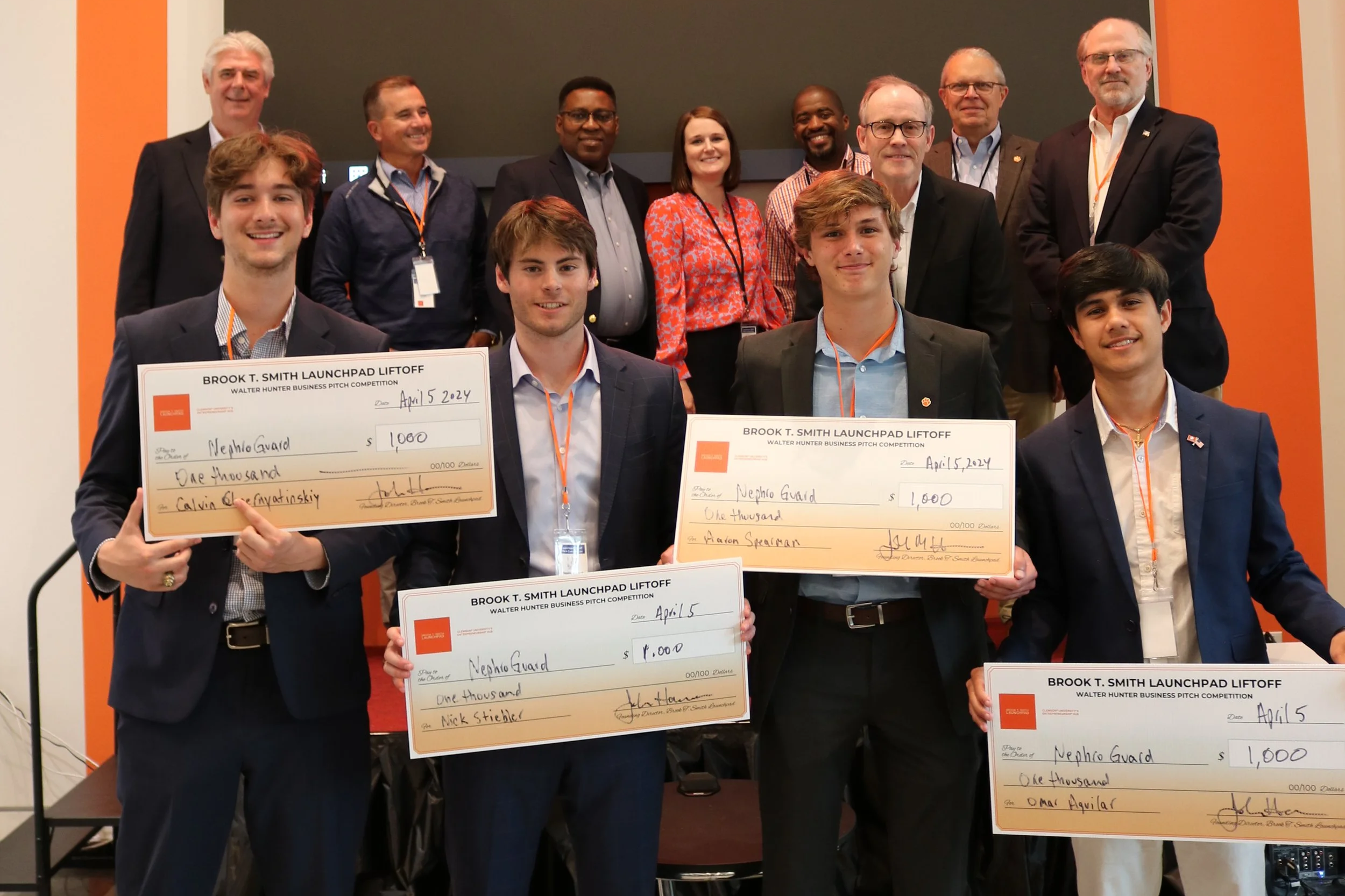
  • Clemson Launchpad Liftoff 2024 — 3rd Place

  • SC PDMA 2024 — 3rd Place

Group of five young men and one older man in suits, standing together at an awards ceremony. One young man in the center holds a trophy with colorful text that reads 'inventure' and the year 2025. The background has a colorful sign with various scientific and technological icons and the word 'PRIZE.' One person on the far left holds a placard with a white paw print on an orange background.
Five young men in suits standing on stage at a conference, with the banner behind them reading 'BMES 2024 Annual Meeting, October 23-25, 2024, The Baltimore Convention Center.' The man in the center holds a plaque, indicating an award or recognition.
Group of young men and older men standing on stage, holding large checks with the date April 15, 2024, at the Walter Hunter Business Pitch Competition, celebrating their awards.
Six young men standing together, holding a large check and a trophy, at an award ceremony or competition event.
Light-Leaks-1-imgg-gi3-6ecytua4.png
Logo for NephroGuard with a colorful abstract kidney shape and the slogan "Better Detection, Better Protection"

The problem

  • Current diagnostic methods are inaccurate and detect Acute Kidney Injury (AKI) 48-72 hours after onset, when irreversible kidney damage has already occurred

  • AKI occurs in up to 30% of cardiac surgery patients and can lead to increased ICU stays, chronic kidney disease, and dialysis [1]
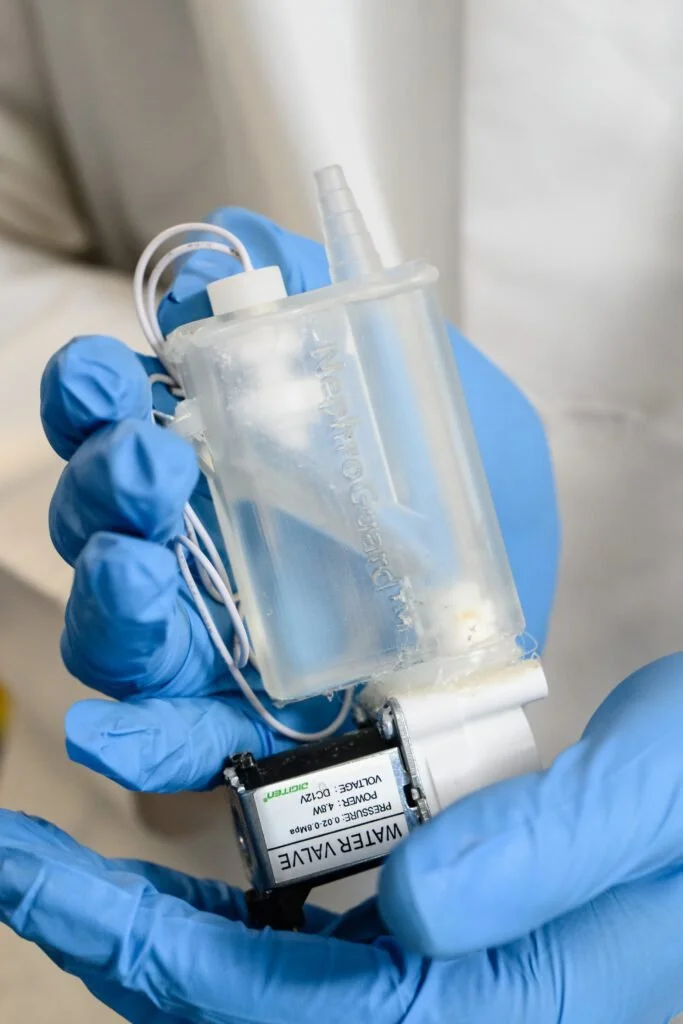
Person wearing blue gloves holding a medical pump connected to a battery, with a clear fluid container attached.

The Solution

  • Continuous and automatic kidney damage biomarker monitoring to detect AKI within hours of onset

  • Compatible with all Foley catheters by connecting in-line

  • AI/ML‑enabled for accurate, automated diagnosis

[1] Vives, Marc, et al. "Cardiac surgery-associated acute kidney injury." Interactive cardiovascular and thoracic surgery 18.5 (2014): 637-645.
MUSC Health logo with a stylized building on the left, and the text "MUSC Health" and "Medical University of South Carolina" below in blue.

In Collaboration with

Clemson University logo with an orange tiger paw and blue text.
Logo of the South Carolina Research Authority with the acronym SCRA and a hexagonal design in red, green, and blue, representing South Carolina.
Logo of the National Institute of Diabetes and Digestive and Kidney Diseases
NSF logo with a globe surrounded by a gear, and the NSF Corps Hub Southeast Region logo with interconnected green and blue lines, and the text 'NSF Corps Hub Southeast Region'.
Logo with a stylized abstract representation of a DNA strand made of green and blue dots, next to the text 'SChio' in large font, and 'LIFE SCIENCES INDUSTRY' in smaller font below.